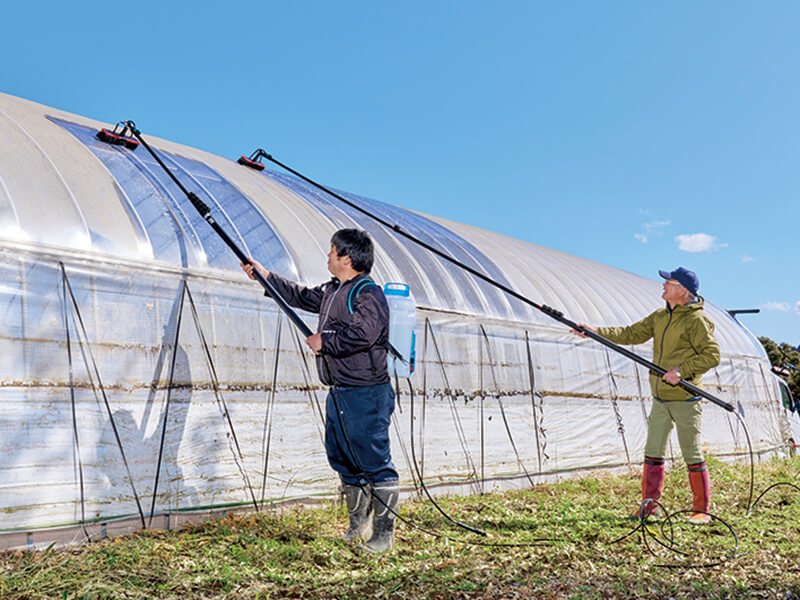

External Greenhouse Shading Systems
In modern protected agriculture, commercial greenhouse shading systems play a critical role in crop success. They precisely regulate light transmission, heat accumulation, and relative humidity inside the structure, creating an optimized microclimate for higher yields and superior plant quality.
With continuous engineering advancements, various types of greenhouse shade curtains and energy screens have emerged. Understanding their unique mechanisms is key to selecting the right climate control strategy. As a leading global provider of integrated greenhouse engineering and manufacturing services, Agrisy delivers a deep dive into the seven core types of commercial greenhouse shade screens, their operational mechanics, and how to choose the ideal system for your facility.
Contents
- 1 The Mechanics of Commercial Greenhouse Shading Systems
- 2 Conclusion: Designing Your Precision Microclimate
The Mechanics of Commercial Greenhouse Shading Systems
Modern greenhouse screening systems are driven by automated mechanisms, primarily categorized into Rack and Pinion Drive Systems (ideal for rigid, heavy-duty applications) and Cable and Drum Drive Systems (perfect for flexible, smooth, and multi-span layouts). Driven by intelligent environmental controllers, these automated screens react in real-time to solar radiation, temperature changes, and photoperiod schedules.
Commercial shading architectures are divided into two main configurations based on their positioning relative to the greenhouse roof:
- External Shading Systems: Mounted above the greenhouse glazing to block solar radiation before it enters the structure.
- Internal Shading Systems: Installed beneath the greenhouse trusses to manage light diffusion, humidity, and thermal retention.
Part 1: External Greenhouse Shading Systems
External shade curtains are engineered to stop solar heat gain at the outermost boundary. By reflecting or absorbing sunlight before it passes through the glass, poly, or polycarbonate cladding, external screens offer the most powerful cooling performance for high-temperature regions.
1.Knitted Monofilament Shade Cloth
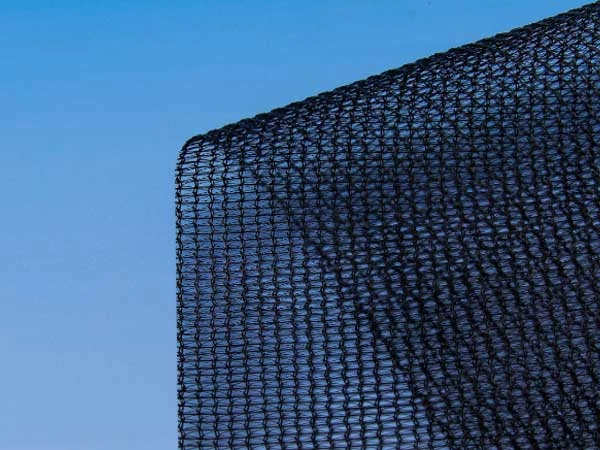
65% Monofilament Shade Net
- Material & Build: Woven from 100% virgin High-Density Polyethylene (HDPE) infused with advanced UV inhibitors and anti-oxidation stabilizers. It undergoes high-temperature pre-shrinking to ensure structural integrity against harsh weather.
- Core Advantages: Exceptional tensile strength, heavy wind resistance, and durable protection against heavy rain, snow, and hail. Due to the round structure of the monofilament yarn, it allows consistent airflow while reducing UV degradation.
- Performance: Lowers internal greenhouse temperatures by 3°C to 4°C in peak summer and mitigates frost radiation in winter.
- Shading Rate Range: 55% to 90%. Highly recommended for automated external rack and pinion setups on multi-span commercial greenhouses.
2.Knitted Mono + Tape Combination Screens
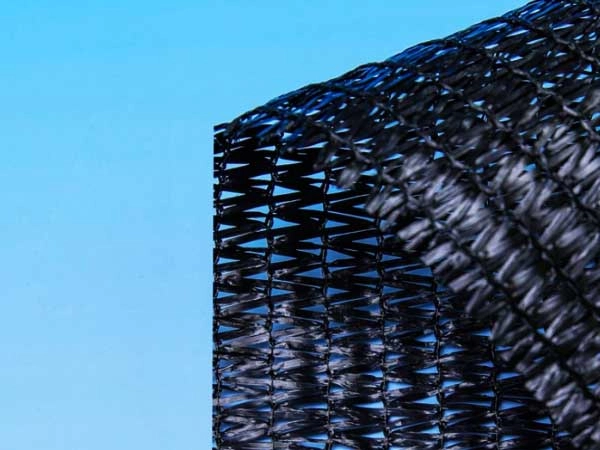
Knitted Mono + Tape Combination Screens
- Material & Build: A hybrid weave combining high-strength round monofilament strands with flat tape yarns.
- Core Advantages: The flat tape yarns create a wider surface area that reduces light transmittance and provides a much higher shading density. It acts as an excellent barrier against heavy hail and torrential downpours.
- Performance: Provides superior shading but features higher wind resistance. It is best suited for external shading on single tunnels or areas with mild wind profiles.
- Shading Rate Range: 65% to 95%.
3.Black & White Reflective Curtains
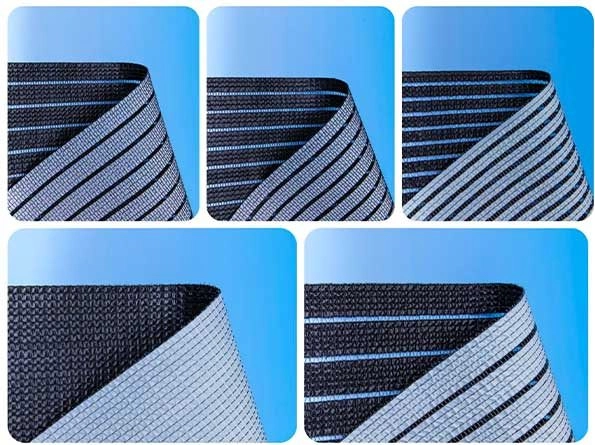
Black & White Reflective Shade Screens (Exterior)
- Material & Build: A co-extruded dual-surface polymer film designed for external motorized systems.
- Core Advantages: The outer white surface features high albedo, reflecting solar radiation away from the greenhouse to prevent heat buildup. The inner black layer absorbs ambient internal light, eliminating harsh glares.
- Performance: Drastically lowers cooling utility costs during hot summer months while providing an optimized light spectrum underneath.
- Shading Rate Range: 65% to 99%.
4.Open-Structure Aluminum Reflective Screens
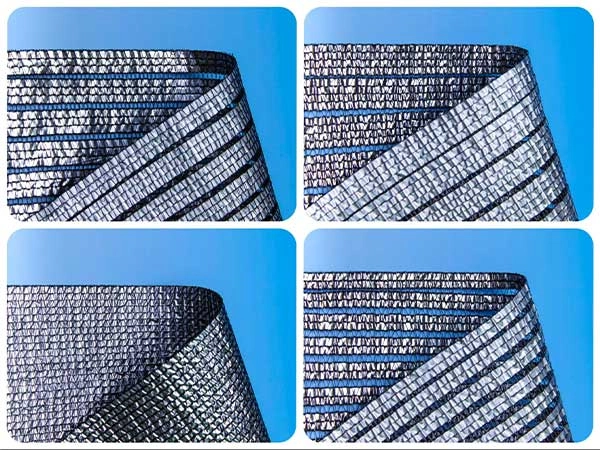
Aluminum Reflective Shade Screens (Exterior)
- Material & Build: Engineered with alternating strips of highly reflective aluminum foil and durable HDPE tape, woven into an open, breathable pattern.
- Core Advantages: Traditional plastic shade cloths absorb a portion of solar heat; aluminum foils completely reflect it. The open structure allows hot air to escape upward through the screen, preventing thermal pockets.
- Performance: The ultimate premium solution for tropical climates, desert environments, or commercial facilities facing extreme summer heat waves.
- Shading Rate Range: 65% to 99%.
Part 2: Internal Greenhouse Shading Systems
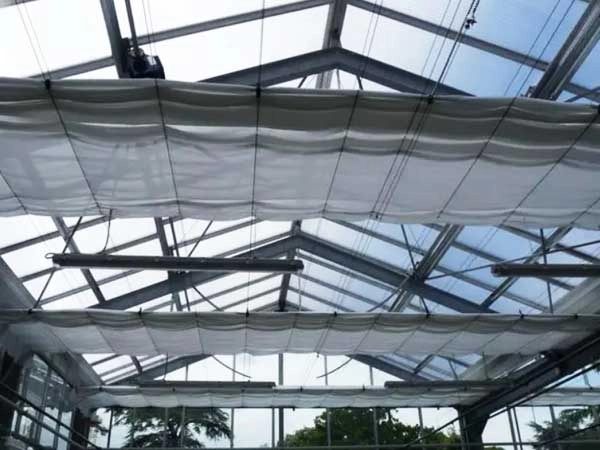
Internal Greenhouse Shading Systems
Internal shade curtains are multi-functional climate boundaries. While they assist external shading systems during peak radiation hours, their primary industrial advantage is forming an insulated thermal blanket. This heavily reduces the heating and cooling load of greenhouse HVAC systems.
1.Closed Aluminum Thermal Screens
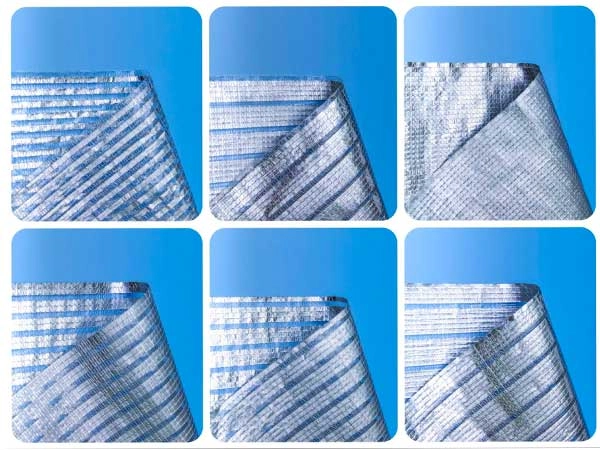
Aluminum Shade & Energy-Saving Screen Products (Interior)
- Material & Build: A dense, closed weave of aluminum foil and polyester strips.
- Core Advantages: During the day, it reflects and scatters incoming sunlight to prevent canopy scorching. At night, the aluminum barrier blocks thermal infrared radiation from escaping, trapping heat inside the plant zone.
- Performance: Drastically lowers winter heating costs by up to 40% to 50%. By keeping a stable microclimate overnight, it eliminates dew formation on leaves, significantly reducing the risk of fungal outbreaks like powdery mildew.
- Shading Rate Range: 55% to 99% (with proportional energy-saving capabilities).
2.Light-Diffuse Energy Curtains
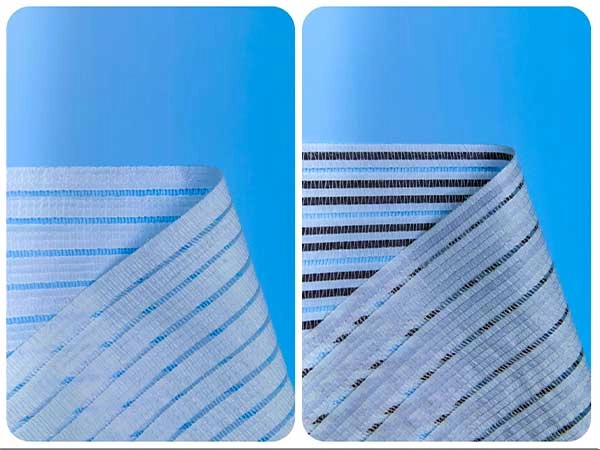
Light-Diffuse Energy Curtains(Interior)
- Material & Build: Specialized white translucent poly-olefin filaments engineered for light scattering.
- Core Advantages: Instead of simply blocking light, it breaks up direct, harsh sunbeams into a soft, multidirectional cloud of light. This light-diffusion technology ensures that sunlight penetrates deep into the lower crop canopy.
- Performance: Eliminates hot spots and shadow lines from structural trusses. Even distribution of diffused light promotes uniform photosynthesis, accelerating balanced plant growth, increasing crop consistency, and avoiding tip-burn.
- Shading Rate Range: Over 80%.
3.Automated Total Blackout Curtains
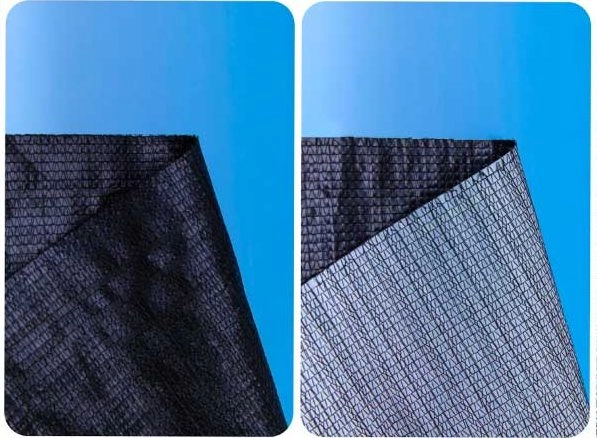
Flame-Retardant Blackout Curtains (Interior)
- Material & Build: Multi-layered, light-impermeable fabric systems designed primarily for photoperiod-sensitive crops (such as medicinal cannabis, poinsettias, and chrysanthemums) and indoor grow rooms.
- Core Advantages: Features an upper reflective side for day-time cooling and an absolute light-trapping inner layer. When fully deployed via automated cable systems, it achieves complete darkness.
- Performance: Guarantees up to 99.99% light deprivation for precise flowering cycle control. It also functions conversely at night to contain powerful indoor grow lights, preventing light pollution into surrounding communities and complying with strict zoning laws.
Conclusion: Designing Your Precision Microclimate
Choosing between an external shading layout, an internal thermal screen, or a dual-curtain integrated system depends on your regional climate data, greenhouse structural load, and the specific photoperiod demands of your crop. While external shading delivers the highest cooling efficiency in hot, arid zones, high-latitude or high-altitude regions often rely strictly on automated internal thermal screens to combat overnight temperature drops.
At Agrisy, we specialize in providing custom, integrated greenhouse solutions—from initial structural layout and automated screening mechanics to advanced HVAC and automated environment control.
If you are looking to retrofit your commercial facility or design a turnkey greenhouse system with the latest automated shading technologies, contact Agrisy today for factory-direct engineering support and competitive wholesale pricing.